Every word, explained
The grades, figures, roles and ideas behind FotScout, in plain words.
Grade, Rating and Similarity score
The three numbers you meet on every player. Each colour keeps one meaning across FotScout.
The grade calculated by FotScout, dynamic to each position he plays. It weighs how far his figures stand above his league's average at that position and role, his minutes and starts, the strength of his club and his league, the gap between his league and the strongest leagues, and other metrics. A top side is usually full of players graded in the 80s, middle sides often in the 70s and lower sides closer to the 60s; a player who breaks 90 is exceptional.
A score out of 100 for how alike two players are, worked out from their grades and statistics at the same position. The closer to 100, the closer their game.
The average match rating throughout the season, on a scale of 10. A rating of 7.0 represents a sound performance and 8.0 a very good one.
The twelve positions
Where a player plays. Point at a position to see its name.
What FotScout does
The seven parts of FotScout.
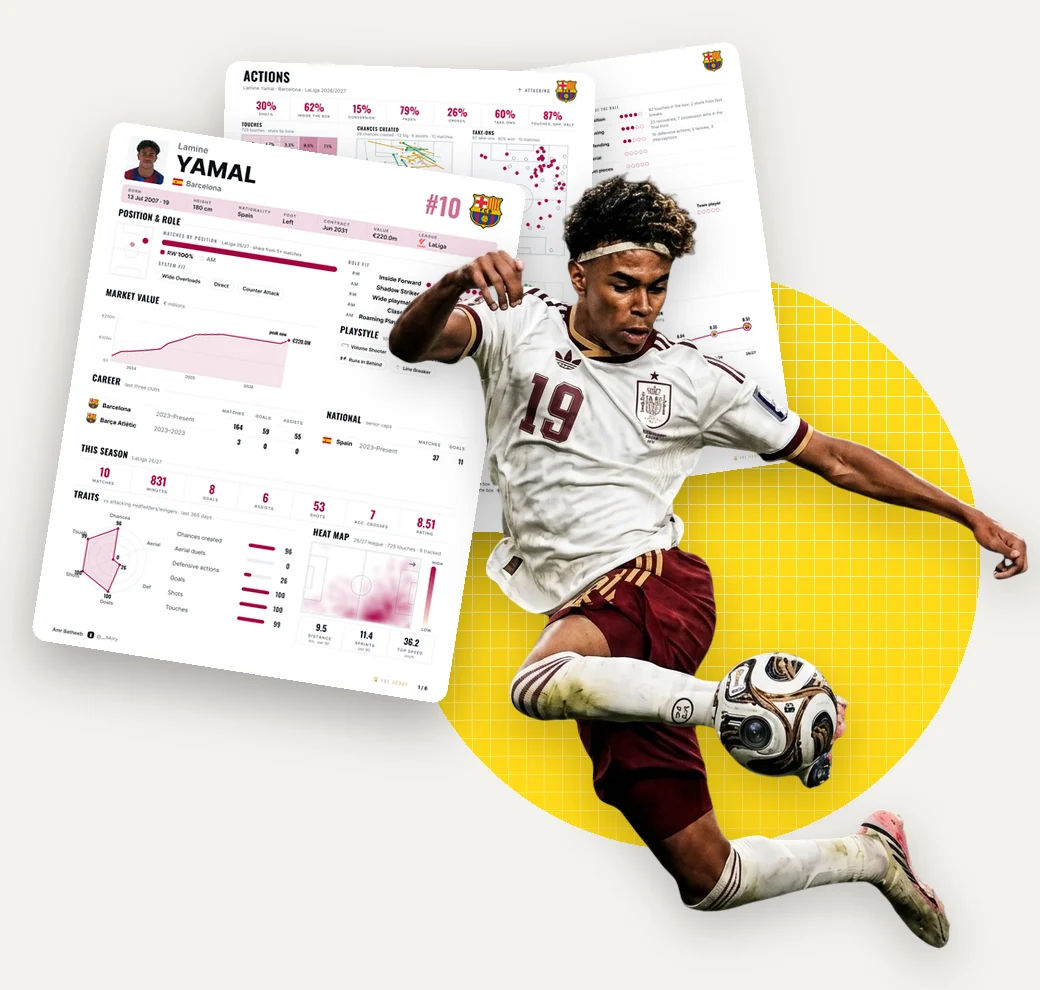
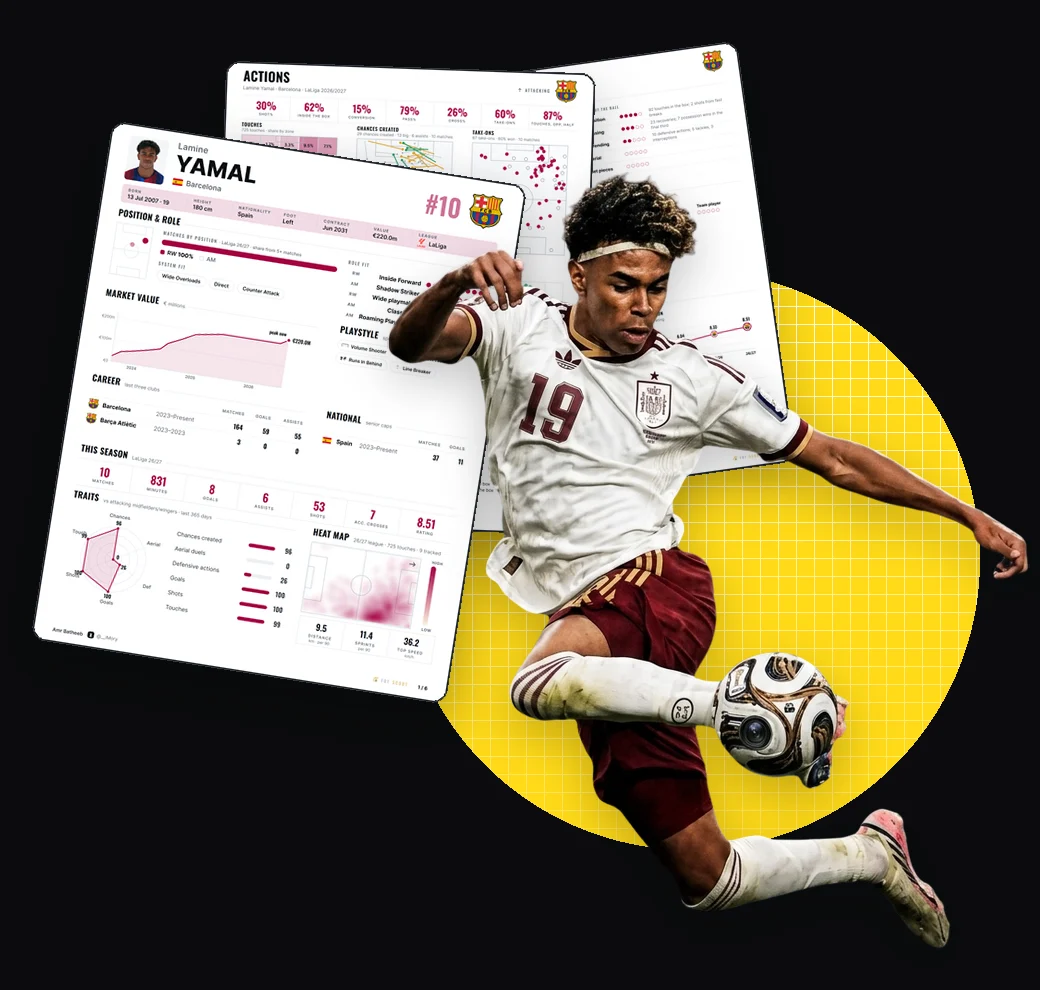
Turn player data into comprehensive scouting reports with maps, charts, key figures, and your own notes and assessments.
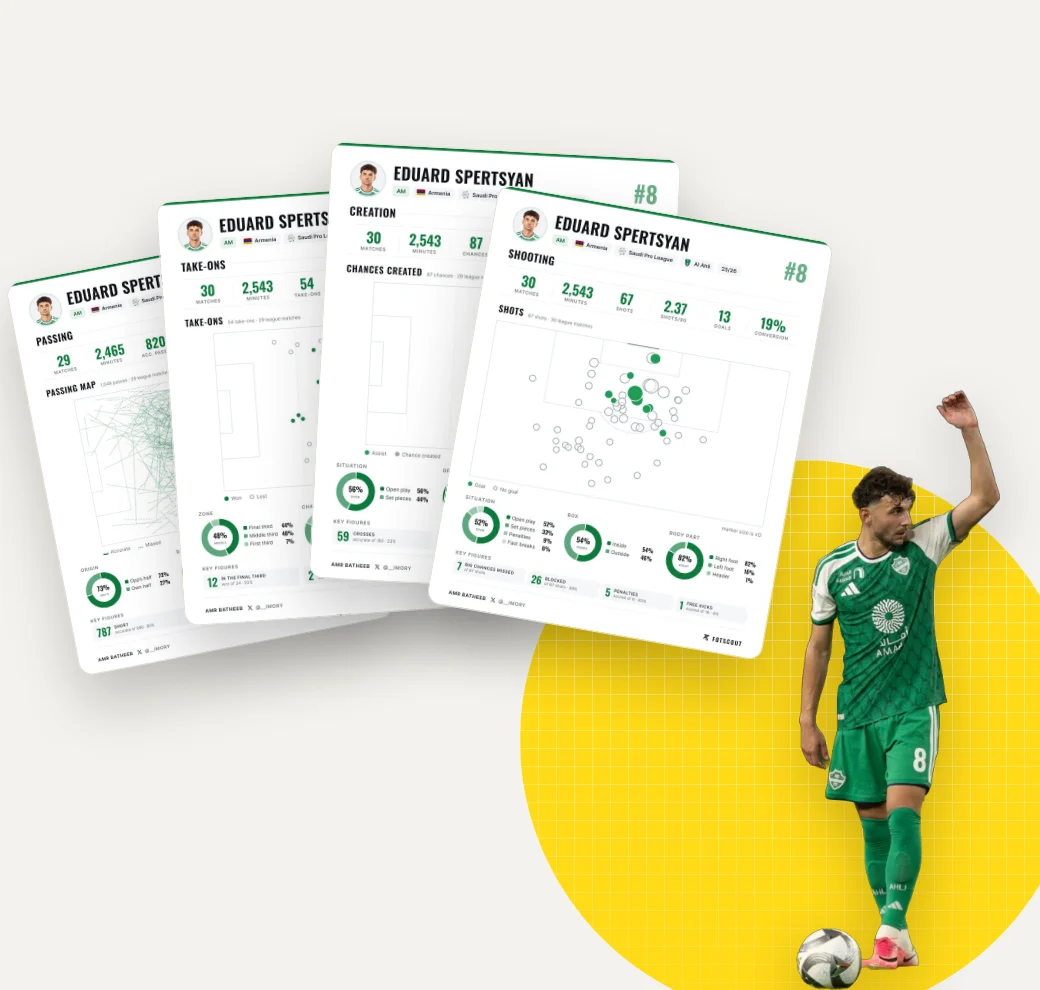
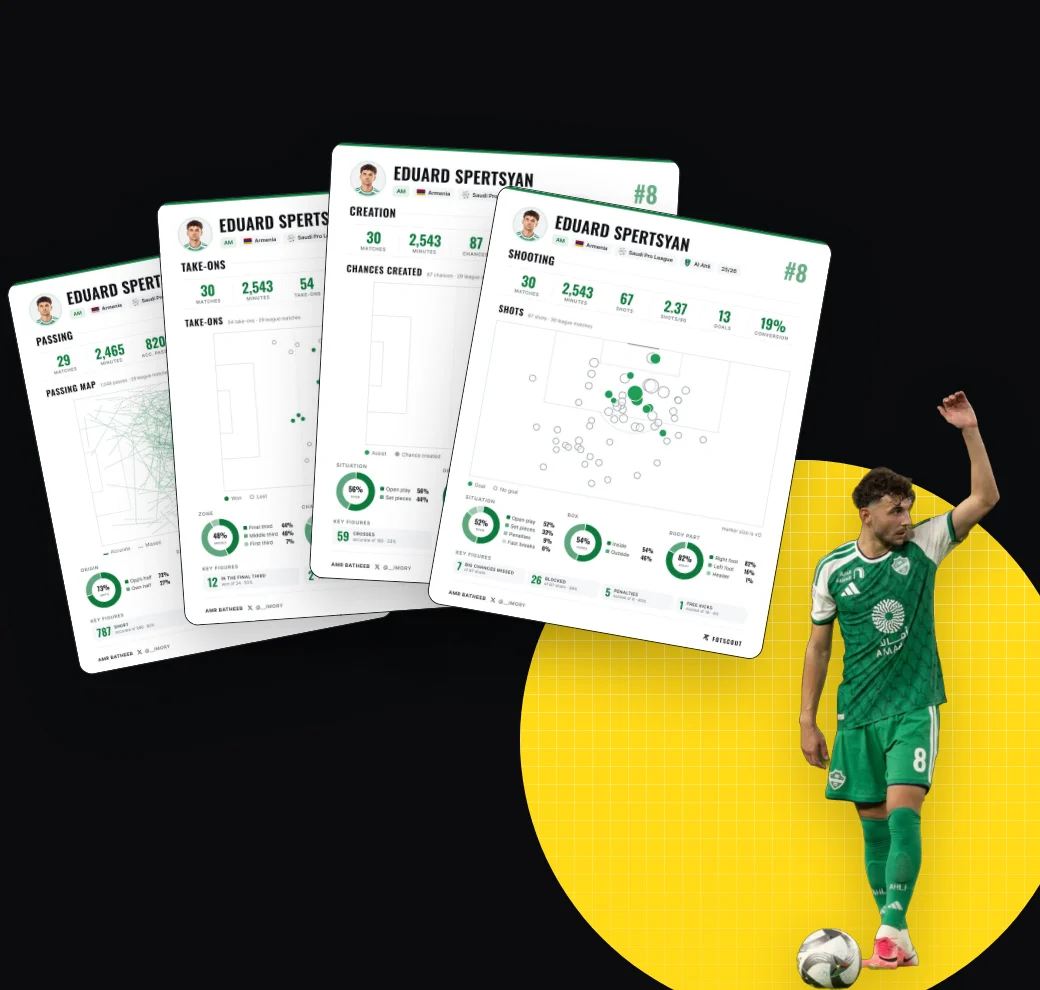
Turn individual aspects of player performance into visual reports that reveal the strengths, tendencies, and output behind the numbers.
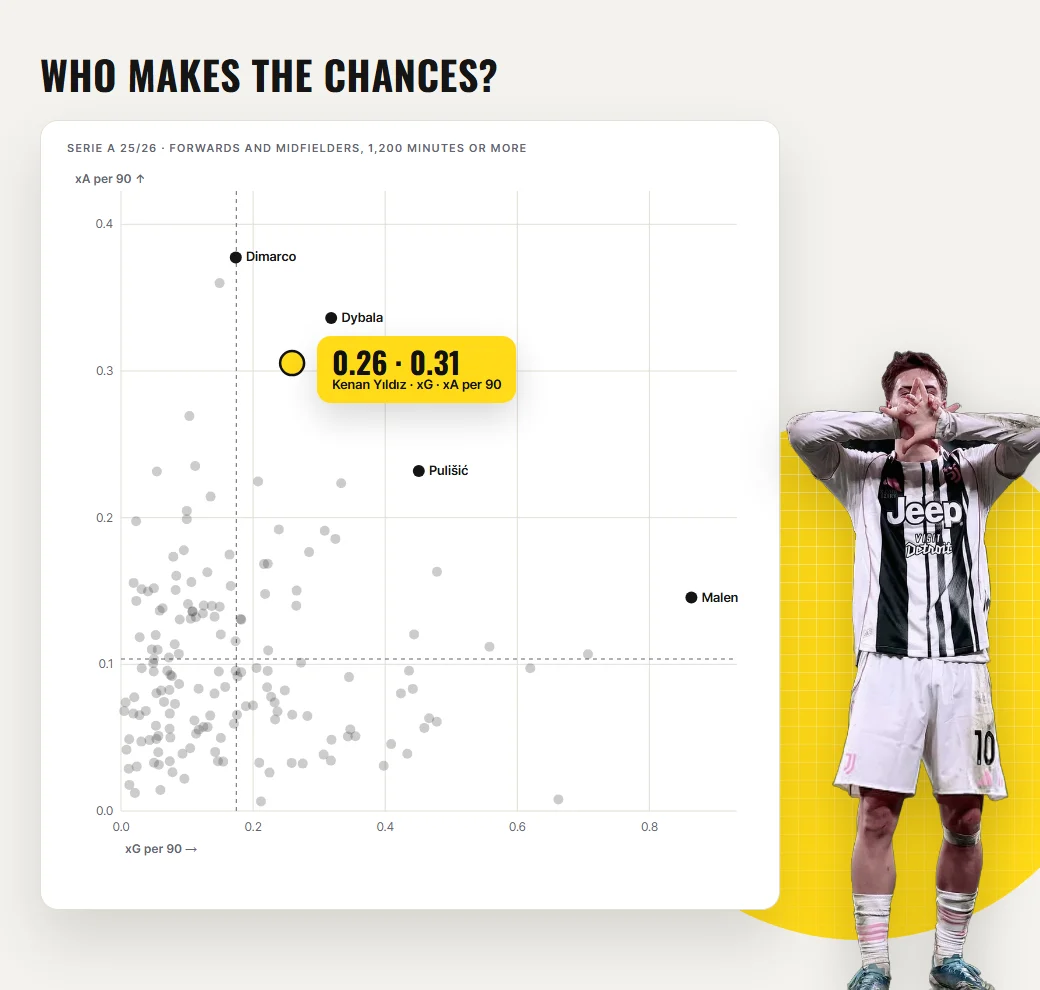
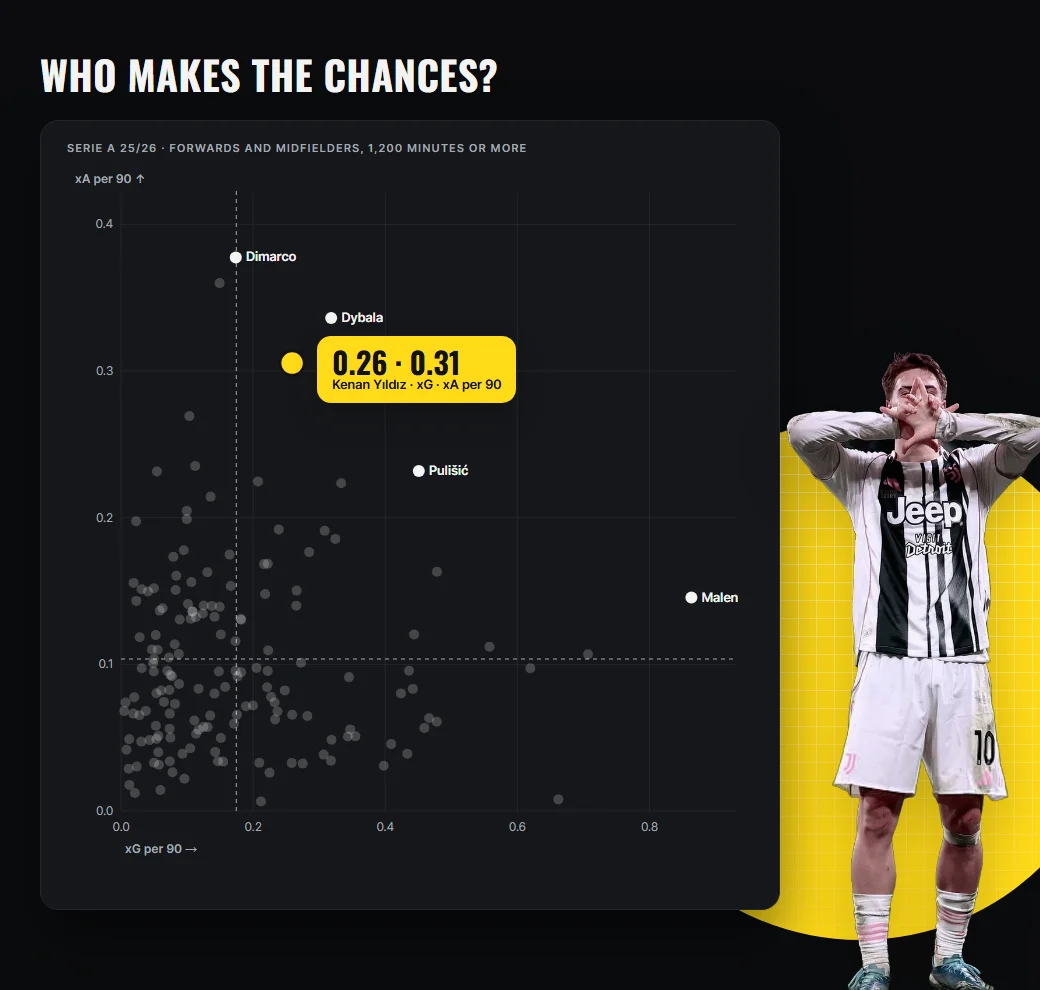
Interactive charts to highlight players performance, identify outliers, track trends, and visualize your analysis.
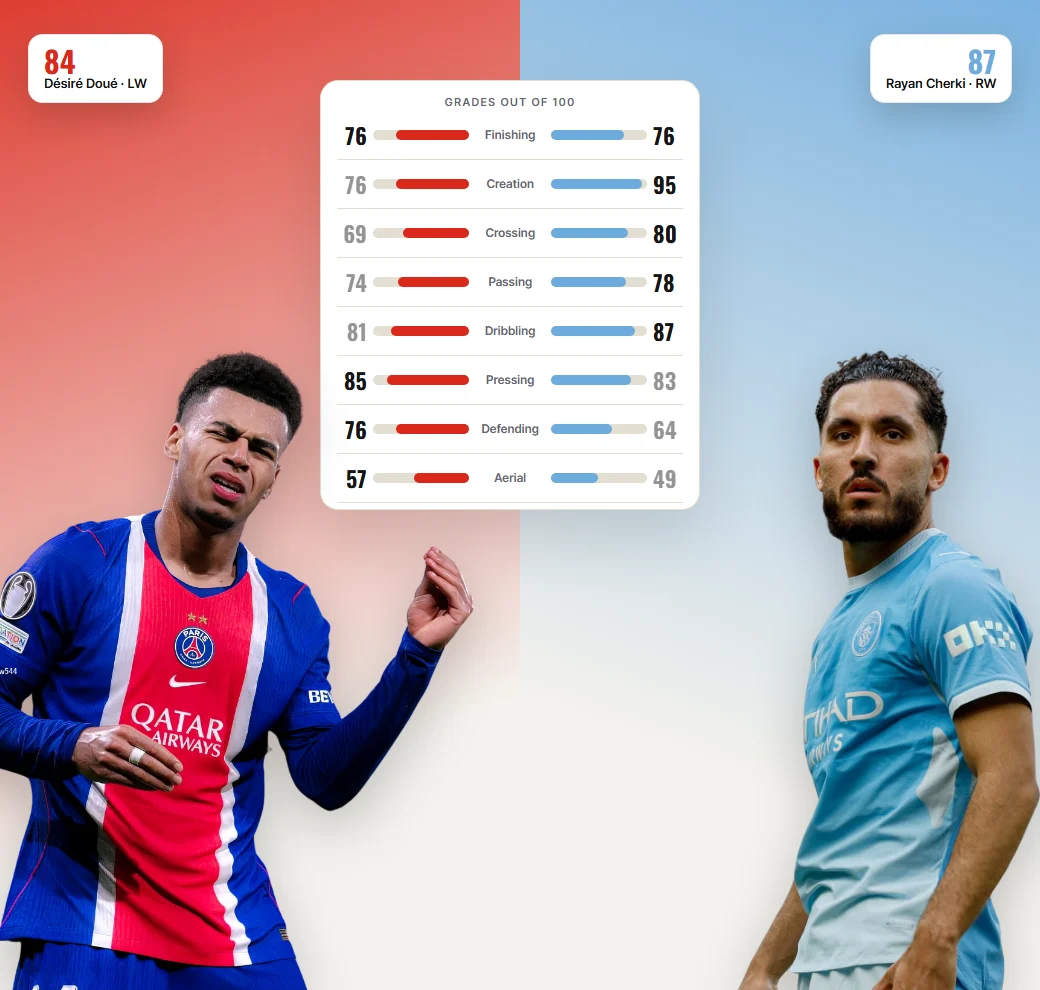
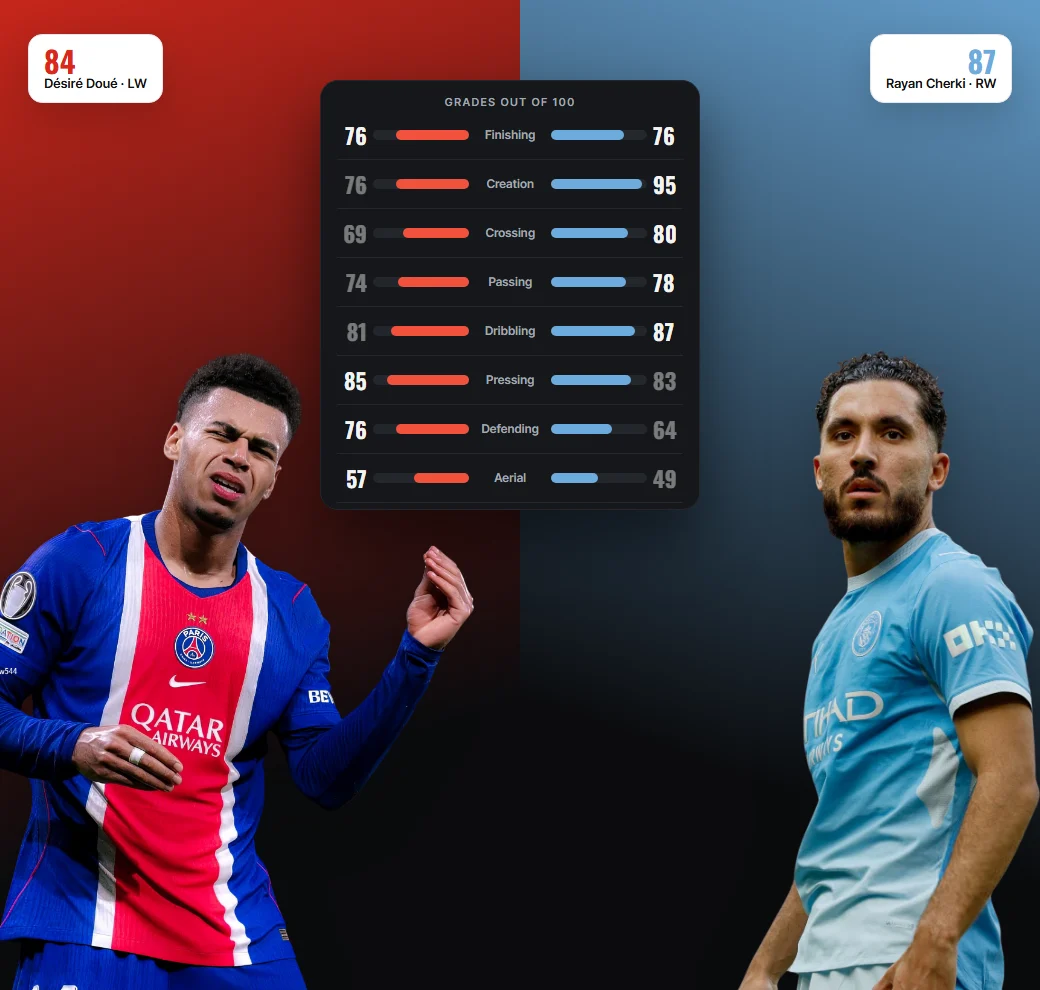
Evaluate players side by side using grades, weighted performance categories, data and statistics to understand their differences.
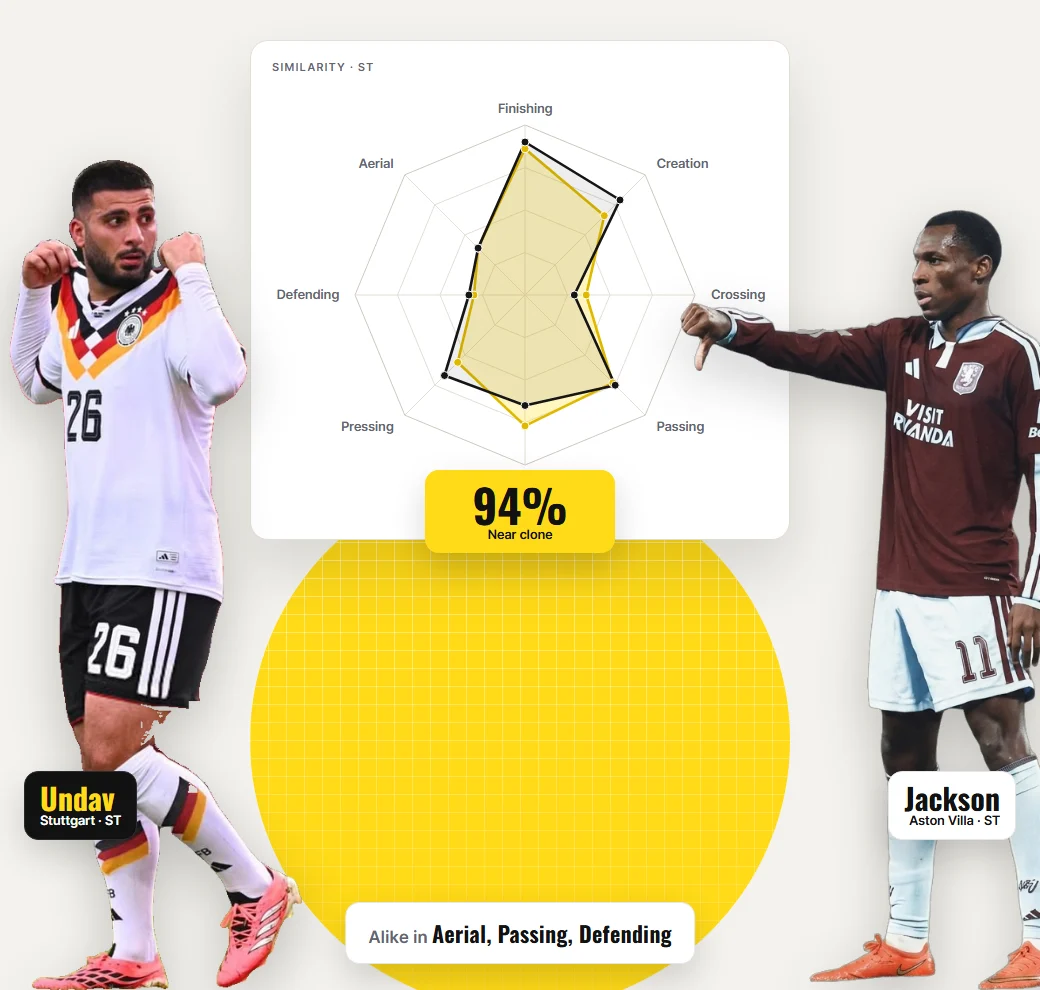
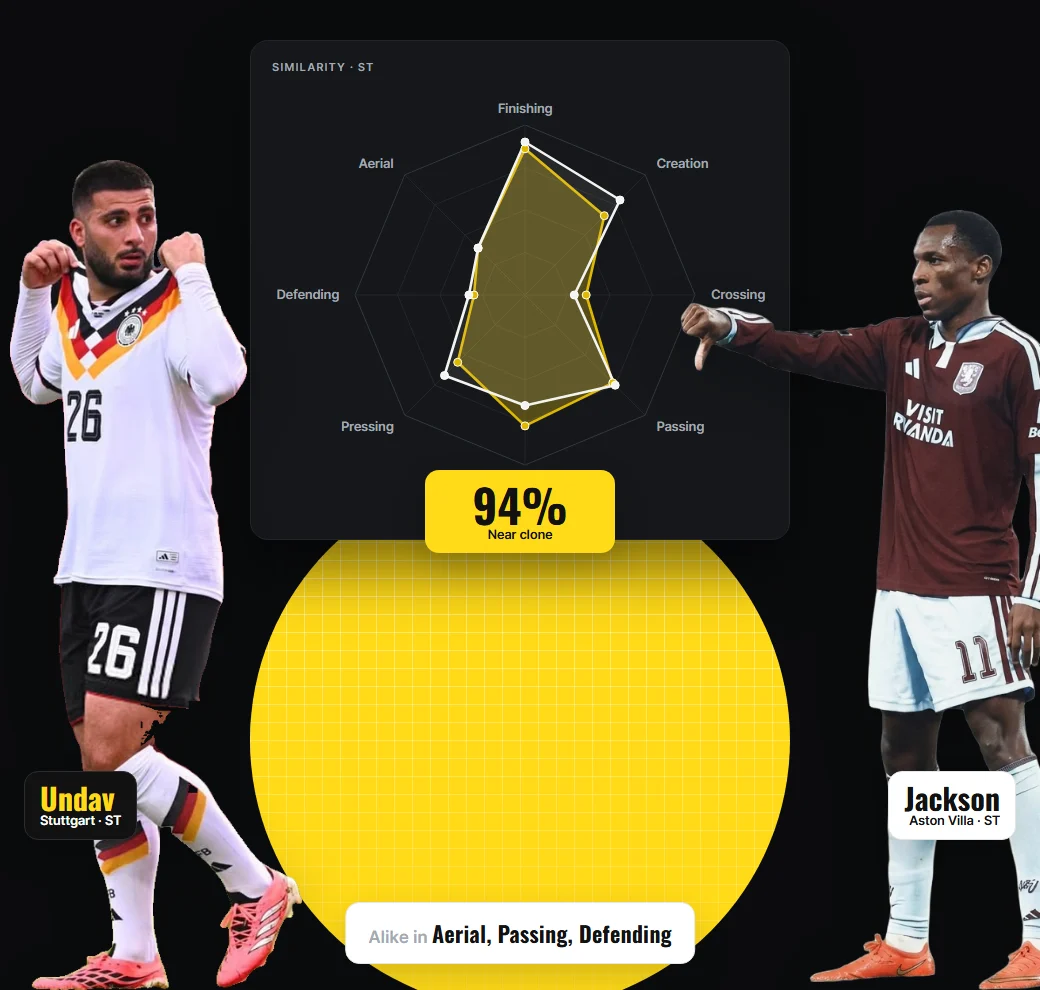
Identify potential replacements, squad upgrades, and emerging prospects through player similarity scores.
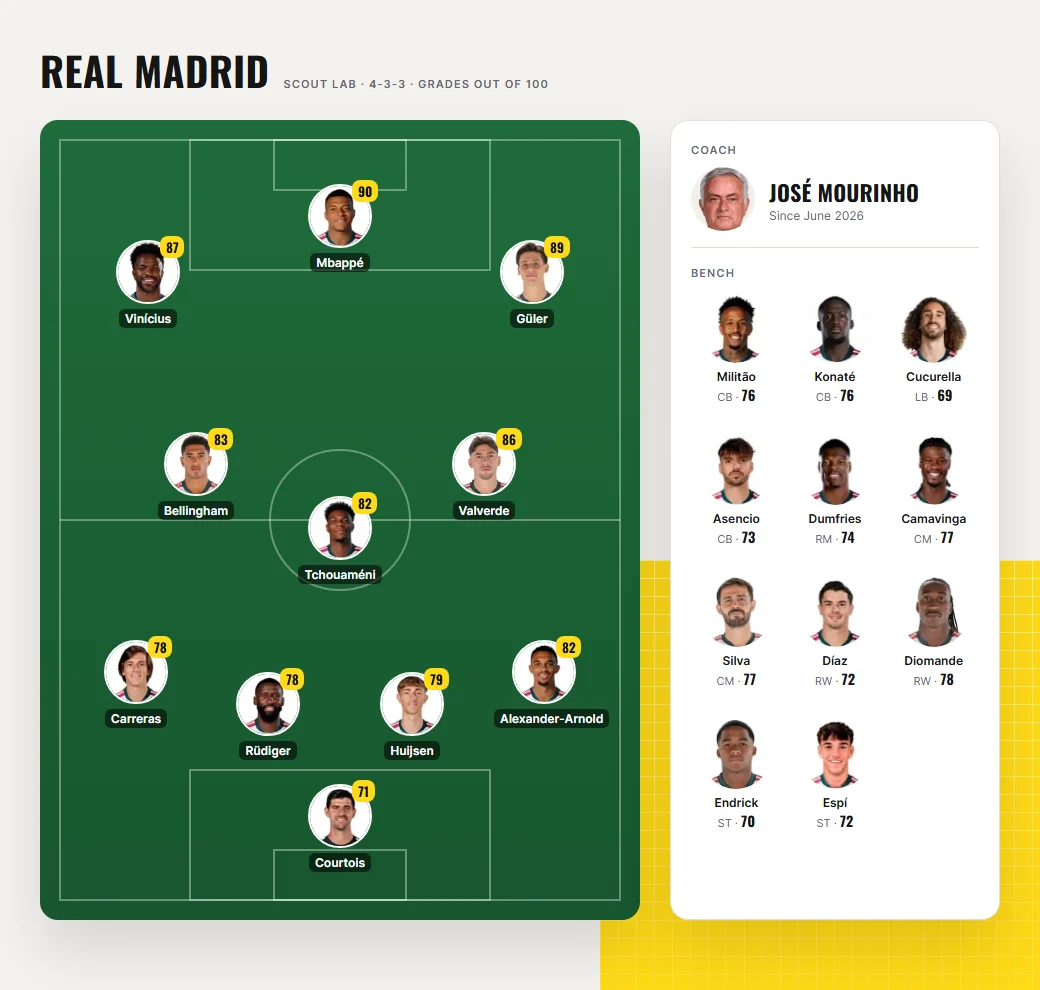
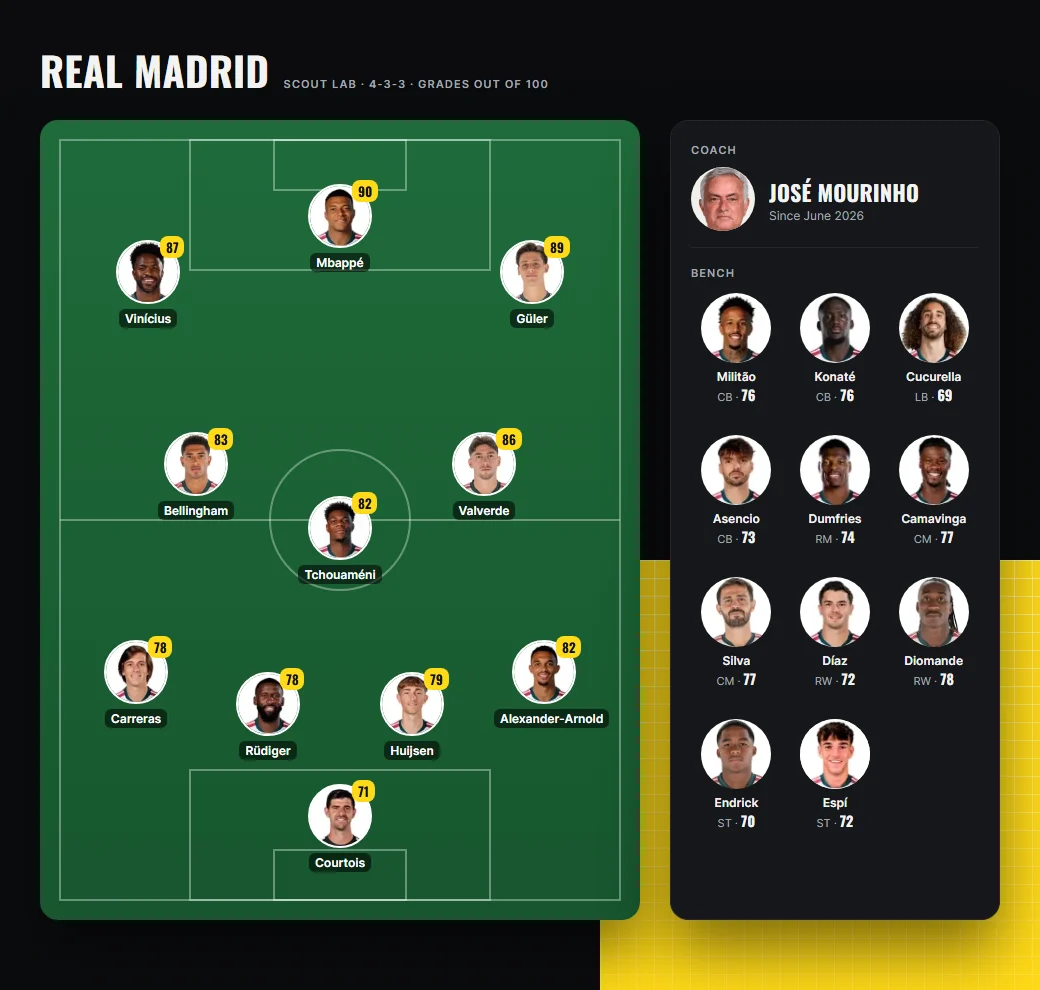
Organize your recruitment targets, assess your options, and evaluate how each player fits your squad’s needs.
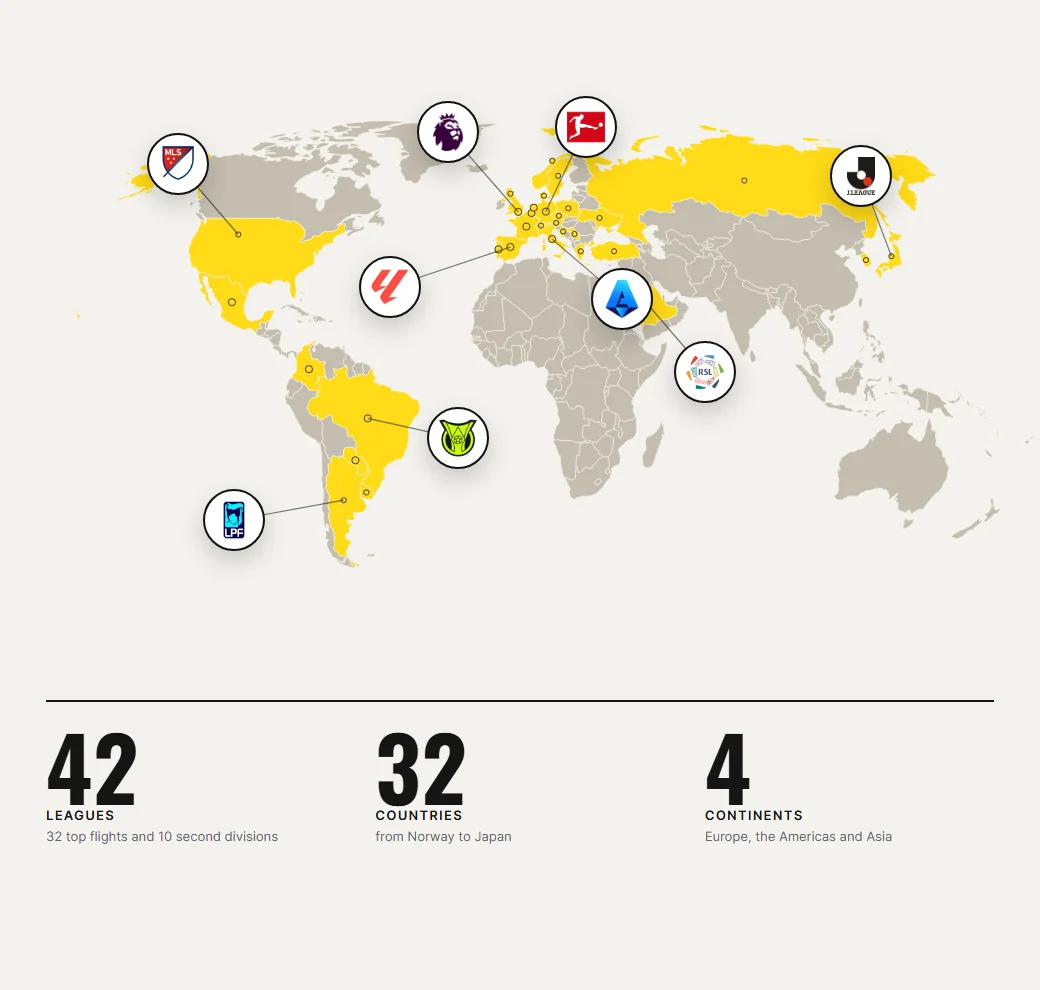
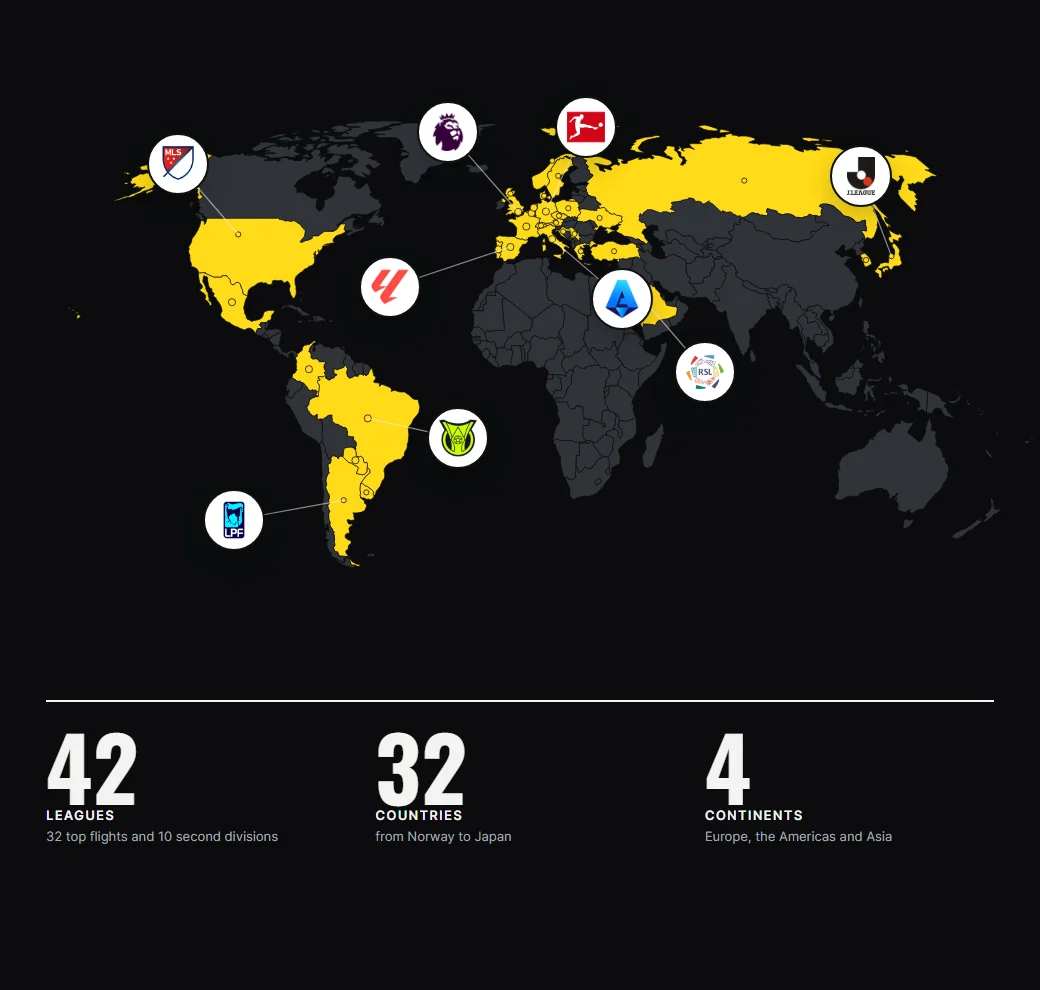
Explore over 40 leagues worldwide, with club profiles, standings, trophies, squads, fixtures, and results, all kept up to date.
General terms
How to read the figures.
A figure scaled to a full 90 minutes, so players with different minutes compare fairly.
His rank from 0 to 100 among players of his position in the same league season.
Elite 90+, Strong 75 to 89, Good 60 to 74, Average 40 to 59, Weak 20 to 39, Poor under 20.
One league season. Cup and national team matches do not count in the league figures.
The scout's written view of the player.
1 to 10: how well he fits a role, in the scout's view.
The level he is expected to reach or hold: Declining, Limited, Solid, High or Exceptional.
Where his minutes came, position by position: where he played, not how well.
The statistics
132 figures in 9 groups, per 90 minutes unless the name says otherwise.
Standard definitions, open to all.
How grades and similarity scores are weighted, the league tiers, how Compare pairs players, and more.
The roles
34 roles in 9 position groups, each with a player who stands for it.
STStriker 4 roles

Leads the line and plays on the shoulder. Finishes, but also links play and stretches the defence. The default modern centre-forward.
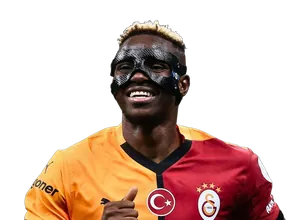
Lives inside the box. Low touch volume, high shot volume; the value is movement and finishing, not build-up.
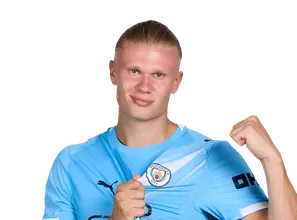
The reference point for direct play. Wins the aerial, holds the ball under pressure, brings runners into the game.
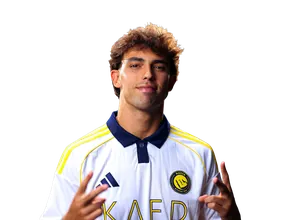
Drops off the line into midfield, pulling a centre-back with him to open space behind for runners. Judged on touches between the lines.
LWRWWingers 3 roles
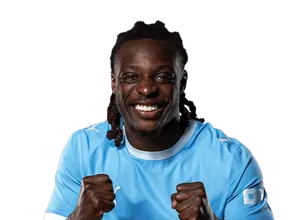
Holds the touchline, isolates the full-back, beats him and delivers. Width is the job.
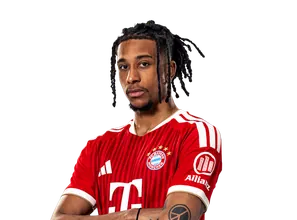
Comes short and inside to receive and create from wide-to-central angles rather than by beating a man.
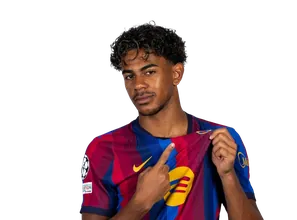
Starts wide and attacks the half-space to shoot. Judged on shot volume and box entries, not crosses.
AMAttacking midfielder 3 roles
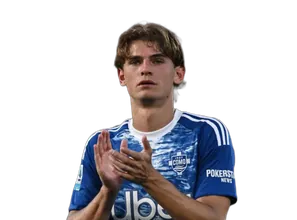
Fixed central creator between the lines. The team's attacks are routed through him.
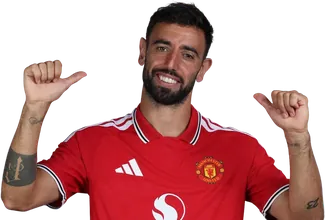
Free role. Drifts wide and drops deep to find the ball; territory is broad rather than fixed.
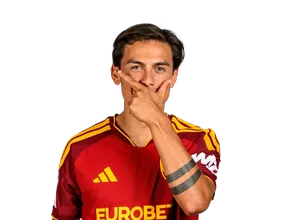
Attacks the box ahead of the ball. His output profile reads like a forward's, not a creator's.
LMRMWide midfielders 3 roles
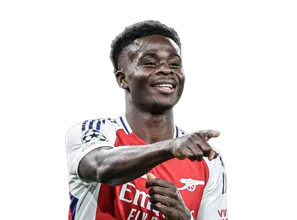
Holds the touchline from a flat midfield line rather than a front three: isolates the full-back, beats him and delivers.
Comes short and inside to receive and create from wide-to-central angles, with a full defensive-phase workload attached.
Two-way. Holds the defensive line, protects and supports the full-back; attacking output is secondary to structure.
CMCentral midfielder 4 roles
Covers ground end to end. Arrives late in the box, then recovers for the press.
Sits when the partner advances. Positional discipline and screening ahead of progression.
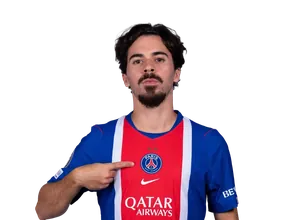
Dictates from the base. Sets tempo, switches play, receives under pressure and breaks the first line.
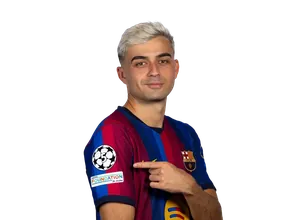
Creates from advanced central areas: a higher starting position than the Deep-Lying Playmaker.
DMDefensive midfielder 5 roles
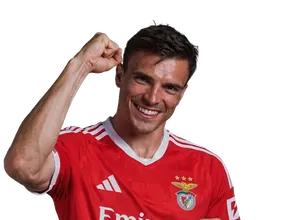
Pure screen in front of the back line. Minimal progression, positional discipline first.
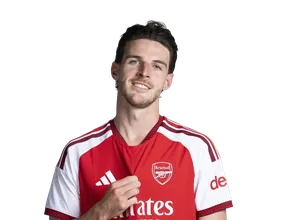
Screens, but also carries and progresses the ball. Less positionally rigid than an Anchor.
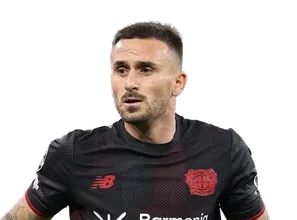
Dictates play from the base of midfield as the single pivot, with no partner to cover him. Judged on passing volume and progression, not on defensive actions.
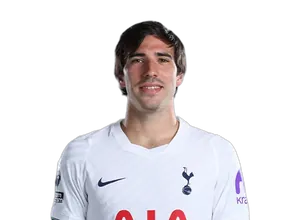
Holds a pure defensive-midfield position, but times runs in behind and into the box to score. Judged on goals and box entries produced from a deep starting position, not on an advanced average position.
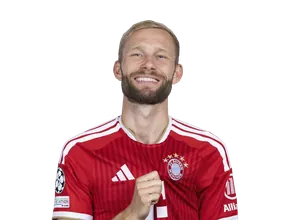
Occupies a wide station in a midfield three, typically in a 3-box-3 or 3-2 build-up. Applicable only where the side uses that structure.
LBRBFull-backs 5 roles
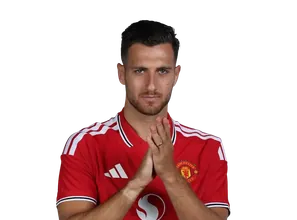
Conventional. Defends first, supports the winger, stays within the back four.

In possession he plays as a CM or DM: he steps into midfield and works as an extra central midfielder while his team has the ball.
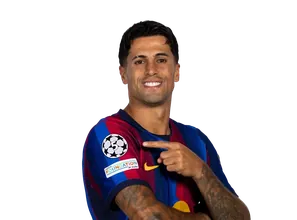
An attacking wing-back who targets the half-space and enters the box to score, rather than overlapping and crossing from the touchline.
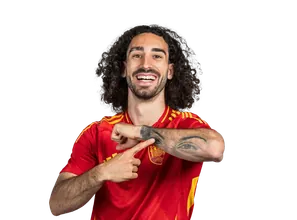
Full-length flank duty in a back five. Defensive and attacking responsibility in equal measure.
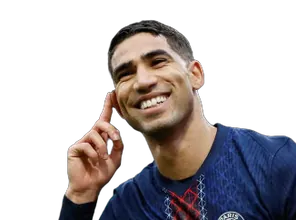
A wing-back whose primary duty is the attacking phase, overlapping and delivering from wide. Output is expected.
CBCentre-back 4 roles
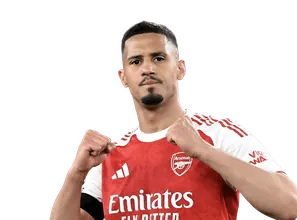
Defends the box and the duel. Ball progression is not part of the job.
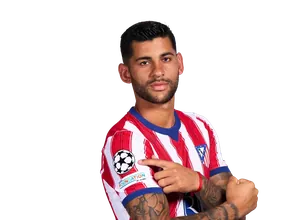
Steps out to meet the forward. Aggressive, front-foot defending ahead of the line.
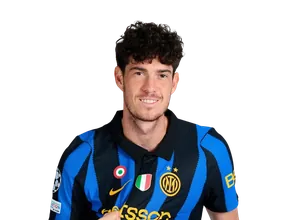
Breaks lines with pass or carry. Judged on progressive passing, not pass volume.
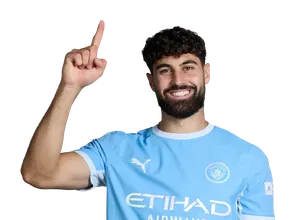
Outside centre-back in a back three. Covers wide areas and steps into midfield when the shape allows.
GKGoalkeeper 3 roles
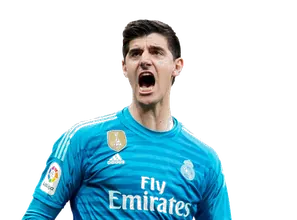
Shot stopper. Guards his line and commands his box.
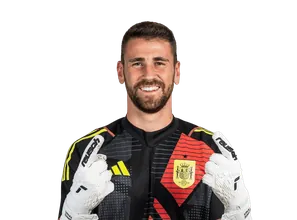
Defends the space behind a high line. Judged on runs out: defensive actions outside the box.
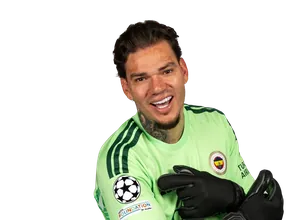
Starts the build-up under pressure. Judged on his short and medium distribution share.
The playstyles
How a player plays, drawn from the figures and from observation. A tendency, not a rating.
Finishing 7

Converts chances at a rate above expectation: goals exceed expected goals.

Attempts a high number of shots per 90 minutes.

A high share of shots are taken from outside the penalty area.

Scores with headers and wins aerial duels in the penalty area.

The designated penalty taker, with a strong conversion record.

A direct goal threat from free kicks.

Finishes with either foot.
Movement 4

Attacks the space behind the defensive line rather than receiving to feet.

Arrives in the penalty area from deep to finish attacking moves.

Receives the ball in the channels between the full-back and the centre-back.

Produces shots and goals from fast transitions.
Passing and ball carrying 8

Wins take-ons at a high rate per 90 minutes.

Retains possession under pressure; rarely dispossessed relative to touches.

Passes that break the opposition lines and take defenders out of the game.

Switches play with a high number of accurate long passes.

Delivers a high number of accurate crosses from wide areas.

Comfortable in possession on either foot.

The designated corner taker.

Delivers long throw-ins into the penalty area.
Defending 4

Engages attackers early and wins tackles and duels high up the pitch.

Wins possession in the final third at a high rate.

Anticipates play: a high number of interceptions and recoveries.

Recovers ground quickly when the ball is played in behind.
Goalkeeping 13

Comes for crosses and high balls inside the penalty area.

Catches crosses rather than punching them clear.

Punches clear more often than catching.

Strong in close-range and reaction saves.

Saves with the feet in one-against-one situations and against low shots.

Strong when an attacker is through on goal.

Saves penalties at a rate above the norm.

Rarely beaten from distance.

Loses out on crosses and high balls.

Leaves the line to sweep behind a high defensive line.

Initiates attacks quickly through fast distribution.

A high share of distribution is played long.

A high share of the goalkeeper's distribution is played short, from the back.
Physical 4

Quick over the first metres, with a high top speed.

Holds off opponents and wins physical duels.

Wins the majority of aerial duels.

Covers a high distance with a high sprint count.
Character and availability 9

Captain or a leading figure within the squad.

Performs in matches of high importance.

Plays several positions to a good level.

Output depends on the tactical system around the player.

Fouls and bookings above the norm.

Errors that led to shots or goals.

Takes time to reach form in a season or a match.

Reached the current level later than most.

A significant amount of football missed through injury.
System fit
The set-ups a player’s profile suits best. Open a coach for the shape of play.
Counter AttackA team that concedes the ball and territory by choice, defends in a compact block and attacks the space behind the opposition the moment possession is won. The shape is deep and narrow out of possession, with the forwards kept high enough to run. It asks for pace, direct running, quick decisions in transition and forwards who can finish from few chances.
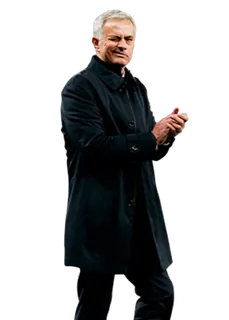 José MourinhoDirect
A team that moves the ball forward quickly with long passes rather than through patient build-up, often bypassing the midfield to reach the forwards or the space behind the defence. The shape stays vertical and compact so second balls can be won. It asks for accurate long passing from the back, forwards who hold the ball up or win aerial duels, and midfielders who arrive on knock-downs.
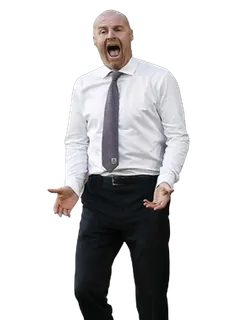 Sean Dyche
 Possession
A team that keeps the ball to control the match, moving it in short passes to draw the opposition out and create openings. Players form triangles across the pitch so the man in possession always has short options. It asks for secure technique under pressure, positional discipline and passing that breaks lines rather than passing for its own sake.
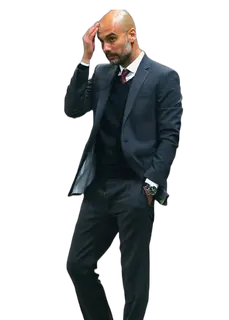 Pep GuardiolaHigh Press
A team that defends far from its own goal, with coordinated pressure on the opposition's build-up to win the ball back near their goal or force an error. The defensive line holds high to keep the team compact behind the press. It asks for sustained running, timing of the trigger, aggression in duels and defenders comfortable with space behind them.
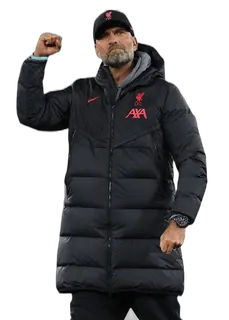 Jürgen Klopp
 Low Block
A team that defends deep and narrow, giving up territory in return for solidity, with two compact lines in front of its own penalty area. The aim is to deny space between the lines and behind the defence, and to clear the box. It asks for concentration, discipline in the shape, aerial strength and the ability to hold a position for long spells without the ball.
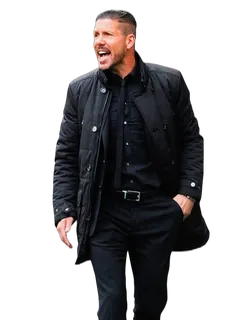 Diego SimeoneBalanced
A team without a dominant tendency: it presses in some moments and sits in others, builds through midfield when it can and goes direct when it must. The shape is a conventional back four with a midfield three. It asks for adaptable players who are competent in several phases rather than exceptional in one.
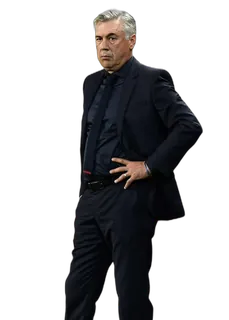 Carlo AncelottiWide Overloads
A team that attacks through the flanks by committing extra players to one side, the full-back, the winger and a midfielder, to create a numerical advantage and free a cross, a cut-back or a switch to the far side. It asks for full-backs who attack, wingers comfortable in tight spaces, quick combination play and forwards who attack crosses.
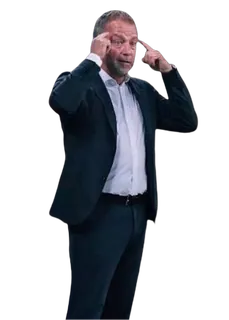 Hansi FlickBuild From Back
A team that starts its attacks from the goalkeeper and the centre-backs with short passes, drawing the opposition press forward to open space in midfield. The centre-backs split, the full-backs push up and the pivot drops in to offer a passing lane. It asks for a goalkeeper who passes, centre-backs calm under pressure and a midfielder who can receive facing his own goal and turn.
 Roberto De Zerbi
Similarity levels
The levels of the Similarity score between two players.
A Clone also has to be among his five closest, so it stays rare.